
Darren Barker's 'Longest Round' as ex-world middleweight champion faces gruelling charity challenge: "I want to do this for Ricky Hatton and for all the people out there suffering"
As a former IBF world middleweight champion, Darren Barker has faced many brutal fights in the ring but his biggest challenge is just about to begin.
Former British boxer, Barker, who is now a DAZN commentator, is set to face 'The Longest Round' - a world-first endurance charity challenge that will push him to the extreme as he travels over 1,800 miles on bike and in the water.
Barker is raising crucial funds and awareness for mental health and suicide prevention, with money supporting CALM (Campaign Against Living Miserably). The fundraising challenge is in memory of Ricky Hatton, who was an ambassador for the charity.
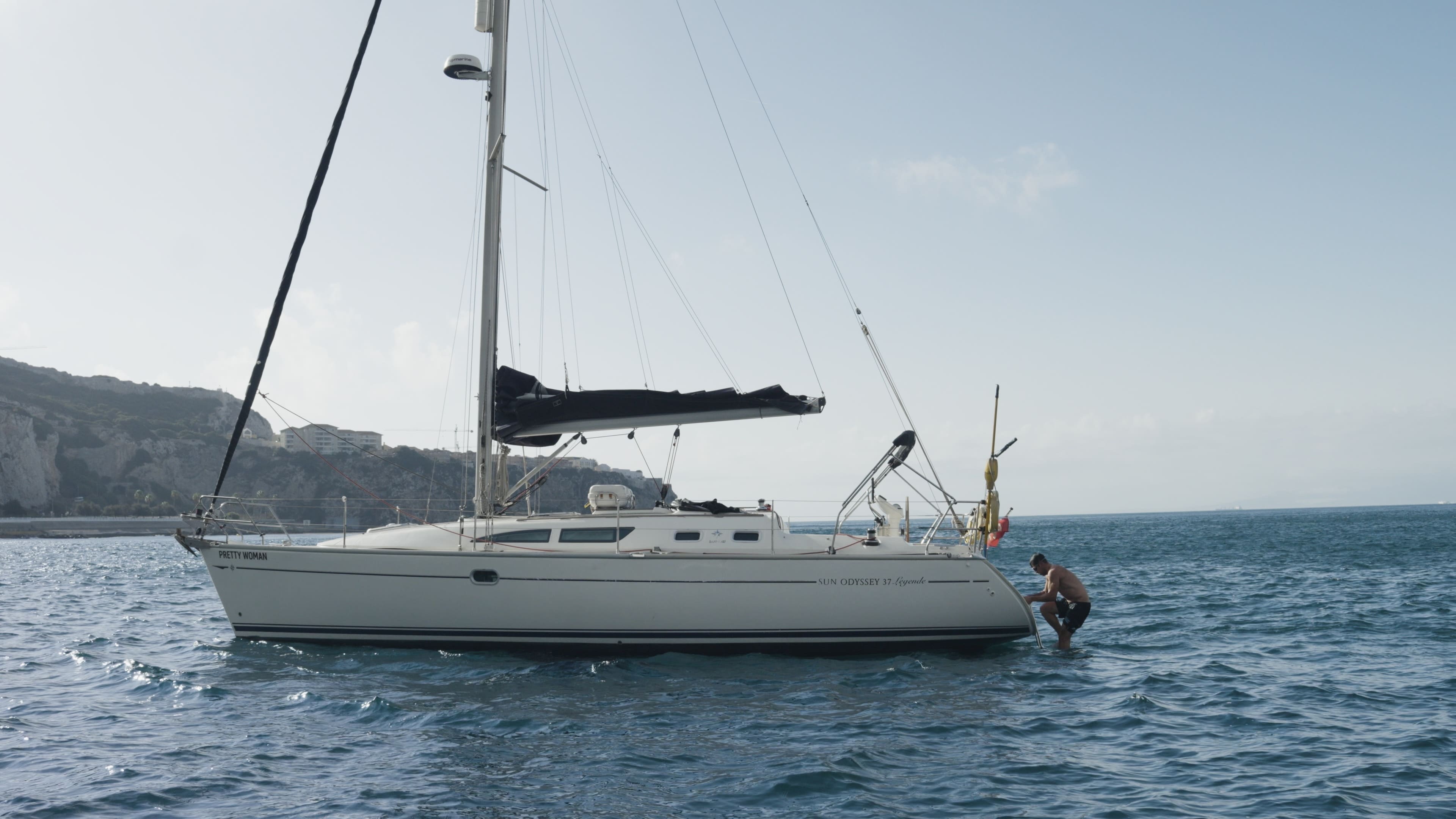
Barker's extreme challenge consists of four gruelling stages: cycling from Edinburgh to Dover, swimming the English channel (21 miles), cycling from Calais to Gibraltar, and finishing off with an open-water swim across the Strait of Gibraltar into Morocco (nine miles).
The 44-year-old is gearing up for his most brutal sporting challenge yet - which begins on Wednesday morning in Edinburgh and is set to last around three-and-a-half to four weeks - but one he incredibly remains undeterred about given the bigger picture.
You can read Darren Barker's exclusive chat with Press Box PR right below, and donations can be made to this JustGiving page: https://www.justgiving.com/page/thelongestround
Can you talk us through how this challenge came about and what made you want to do it?
"Basically last September, I had the honour and the privilege to speak to Ricky Hatton on a podcast. And days later he wasn't with us, so it really struck home and hit hard. And made me really understand what a terrible illness mental health is. I want to do something for Ricky, I want to do something to spread awareness.
"I feel like I owe this to Ricky. He gave up his time to speak to me, so this is something I need to do for him, and I want to do - and I need to do for the bigger picture. I need to do this for all the people out there suffering, to know that it's OK to not be OK. I want to encourage these people to have these uncomfortable conversations, and hopefully save lives in the future."
What did Ricky Hatton mean to you as a boxer but more importantly as a man?
"He will always be a hero of mine. He was the man that brought the big nights to British boxing. The man that brought the big crowds. But away from boxing, he was so likeable - he was the man next door - everyone could relate to Ricky. So funny, charming, just a real good guy with a big heart and someone that people could look up to. He is massively missed."
What does the challenge and the charities mean to you?
"It means an awful lot. It means that I, along with the team, and everybody else following this - that we have an opportunity to make a real difference here. This is about changing lives, helping people. This is bigger than swimming and cycling, this is a huge opportunity to try and make a difference, and that's what I want to do. You, I guess, go through your early stages of life, being selfish, and you're on your own journey, trying to fulfil dreams and aspirations to do this and that, and then you kind of - in my situation anyway - achieve that - and it's about what next. And for me, it feels right to help and just try and raise money and awareness for something now that has really resonated with me.
"Even myself as a retired fighter, grieving the loss of boxing, grieving the loss of my brother, my grandad - understanding that grief is a part of mental health. So along with everyone else, this isn't just me - I may be getting on the bike and in the sea - but this is all of us pulling together and being there for one another. Let's be nice to one another, let's be there, let's support. So much hardship in the world as it is, so if we all pull together - we're halfway there you know."
How important is it for men to keep opening up about their mental health?
"First off, I've never pretended to be a tough or hard man. But if someone on the outside is looking in and thinking 'wow look if a former boxer can talk openly and honestly about some of the struggles he's had, then so can I'. It's OK to not be OK, it's OK to feel down and vulnerable, but there are people that will help. Strength isn't silence. Strength is speaking, strength is having those uncomfortable situations, and it's a starting point to recovery and to feel good.
"So I really just want to get that message out there, that there's so many people out there that will help. CALM, being the charity that I do this for, they're the helpline, and they're fantastic and passionate about this. They really really want to help. And it's about letting people know that there are places like CALM there. That there are people trained to take your phone calls."
You came from a boxing world, how did you find the transition into commentating - and did you think it was tough in boxing to open up about your mental health?
"Yes, I guess so. I had lots of good people around me, but still you're in a tough business where you've got to show limited mental fragility. You want to come across as a tough, hard man, uncrackable, but we are all human and we do all have our ups and downs and we do have our, as I say, vulnerabilities. But it's just understanding, wherever you are, whoever you are, that there's people to help. For me, going from my journey of achieving my dream, to then retiring, it was tough. I was very content as well.
"If you haven't achieved what you set out to do, then I can only imagine how difficult that is. We're just talking about one sport here, people in all walks of life, whether it's sport, in a business capacity, family life, there may be times where you think you've cracked it here and then what follows. So I think on a personal level, this challenge itself has given me a structure, goals, a real purpose again, so I am enjoying the process."
What are you most looking forward to about the challenge?
"Finishing it! No I think pushing myself, seeing what this 44-year-old can still do. Just I look forward to incorporating as many people as I can into this. Like I say, it's about supporting one another, so if anyone fancies meeting me at any point, keep an eye on my social media and I'll be telling you where I'm going, where I'll be stopping. I'm sure we'll have a live tracker as well at some point that I'll be able to share. So yeah, I am looking forward to all of it to be honest.
"There will be lots and lots of tough parts, but the lows make the highs that much greater. But we'll all pull together, we'll all get it done, and then hopefully we raise as much money as possible, but more importantly, as much awareness as we can."
What would it mean to you to finish it - and would it make you realise that even for yourself as a boxer that has accomplished so much - that you can achieve more, and that you're mentally capable of achieving more?
"Yeah I mean that's another thing. I don't want to think that when I retired at 31 that that was my peak as far as my fitness was concerned. I want to see what I am capable of doing. This is all very personal and selfish reasons, but let's see. I think we're all capable of so much more, and I want to find that out. I am intrigued to see how I deal with this both mentally and physically. And all of this, equates to excitement. Let's see how this goes, let's go and find out what I can still do!"
What are you least looking forward to about the challenge?
"I'm apprehensive of the swims because I've done a lot of swimming. The bulk of my training has been swimming, but I am certainly out of my comfort zone, more so in the sea. It's a whole new world, it's not our world - and it's somewhere where you've got to quickly get comfortable with, and it's tough. You've got the saltwater, jellyfish stinging you, you are chaffing everywhere - it is tough.
"But it's about staying switched on, and keeping turning those arms and I have a good team around me. And I've got two really good partners that are joining me on the relay of the English channel. I think together we will all be there for one another, pull each other through. Yeah I think the swims are going to be the toughie."
How have you been preparing for the swims?
"Swimming in the lake quite frequently has been good. It has been quite difficult because they've just warmed up so much because of the temperature. So we've been swimming in temperatures that aren't really realistic to what I am going to be swimming in. Having said that, the channel will be between 18 and 20 degrees, which is absolutely perfect, and so will the Strait of Gibraltar, so I'm not concerned about the temperature. So lots of pool work, lots of leg work, a few swims in the sea. I feel good, I feel as comfortable as I can in the water now."
Do you have a specific fear heading into the challenge?
"I guess the same fear I had when I was fighting. And that's the fear of failure. This is only a success, well first if I get to Morocco, and second of all, as long as lots of noise has been made around mental health. That's obviously the awareness. The money is obviously important, but like I've always said - money is always good to gauge how you're getting on - but the awareness, I just want that.
"I want people talking about, not what I've done, but why I am doing it. So yeah I am a little apprehensive about not the magnitude of it, just not finishing it, but I was always like that as a boxer. I am naturally very competitive, I don't like losing but it is a potential you know. And it scares the life out of me."
How's the training been in general, have you had any setbacks along the way?
"Not really. I mean I've quite liked it because it's different to boxing training. Boxing training, everything is so 100% - you put your body through hell all of the time. But I've kind of found with endurance training, it's more of a sustained type of fitness - it's about you're in zone two or three, you're pushing yourself, but you're not killing yourself. As long as you're mentally strong enough to do the distance, hence the name 'The Longest Round', as long as I'm fit mentally to do it, your body will carry you.
"And as I've gone on, my body has caught up with my mindset and I feel in a good place. I picked the cycling and the swimming because it's weight-bearing. With running, I struggled because I've had two hip operations through boxing. So that's why I've chosen the cycling and swimming. So I feel like my mind and body is aligned now and I am in a good place. I have thoroughly enjoyed the training.
"As a boxer, I was never able to refuel properly - it was always a case of losing weight, getting down to middleweight and now I have been encouraged to eat more. Eat, eat, eat - get the calories in. And it has been fantastic, it has been really good to get stuck into something again. An enjoyable training camp as opposed to one where I am just being beasted ands beaten up week in week out."
How long are you expected to be away for overall?
"Three-and-a-half to four weeks. I know exactly how long the cycle is going to take, because we have all day to cycle the distance that is required every day. Where I can't give you a firm answer is... you get what's called a tide. That's your window to swim the channel, and the tide is a week. So August 27th to September 3rd is my tide. So any point during that week, my pilot, who is the captain of the boat who assists me, he will ring me and it could be at any time saying 'we're setting off at 2 in the morning, get down here'.
"You could set off at 3 or 4pm, whenever, they'll wait for the best conditions, I will get the phone call and off I go. So I couldn't tell you exactly when I'll finish because of that. So if I swim on the 27th, I'll be cycling from France on the 28th. 28th, I'll be cycling on the 29th. So it's a tough one, but eventually it's going to be about three-and-a-half, four weeks."

%20(1)_11zon.jpg)