EXCLUSIVE: F1 2026 season interview with Louis Sharp
“This generation of young motorsport drivers coming through is probably the greatest that there's ever been, my goal is to become an F1 World Champion”
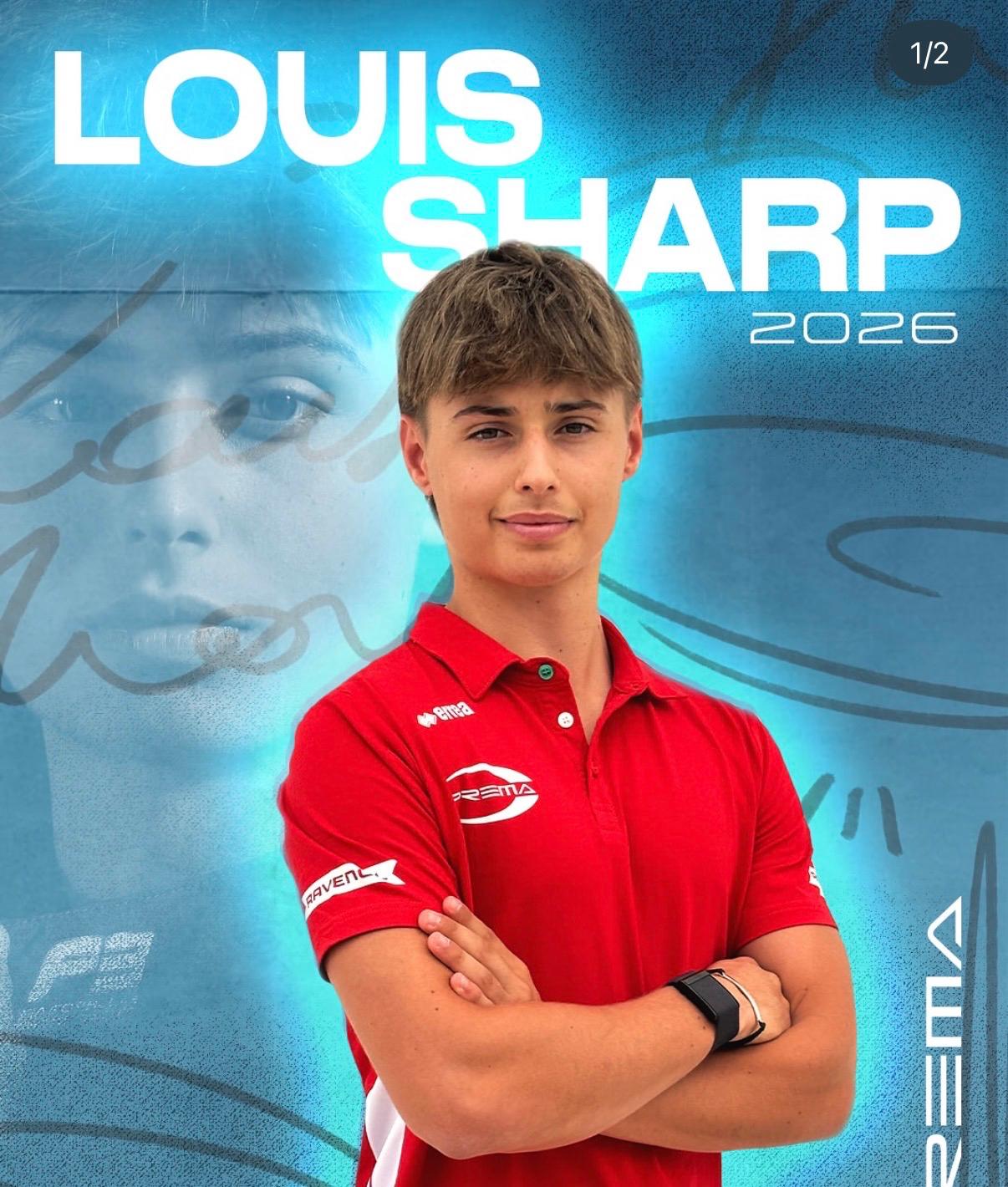
Ahead of the Formula 1 Monaco Grand Prix, Press Box PR has secured held an exclusive interview with Formula 3 driver and motorsport rising star, Louis Sharp.
In an in-depth interview with sports PR agency, Press Box PR, Sharp has discussed his memories in motorsport so far, including his upbringing as a young racer in New
Zealand.
New Zealand and British driver Sharp, who represents Prema Racing, reveals his goal in this year’s F3 campaign with his long-term ambition to become a world champion in F1.
Q. Where were you born and how did New Zealand shape your upbringing?
LS: “I was born in Newark. I moved back home to New Zealand when I was two and then back to Britain when I was 14 to pursue my racing career.
“My accent has weakened a little bit since coming back to England. Whenever I go back home my mates give me a lot of stick for sounding British!
“My Dad is Kiwi, my Mum, she is British, so I've obviously got the dual citizenship and dual passport which comes in handy.
“Born over here, moved to New Zealand when I was two and then obviously grew up in New Zealand.”
Q. How did you get into the sport? Karting is always the starting point for many and you were no different, I take it?
LS: “For young boys who like the idea of speed, yeah that was it. I don't come from a motorsport background at all. Most guys in a similar position to me come from families with one.
“In my case that's not true at all. My dad was a rugby player, who played for Canterbury in New Zealand as a scrum half. He played for New Zealand under 21s then moved to the UK and played for Kilmarnock.
“He never played for the All Blacks officially, unfortunately, but he was a professional player for more than 10 years.
“So, rugby was the first sport I took up and when I was very young, I wanted to be an All Black. That's what I wanted to do; that was kind of my dream. That was my dad's dream for me as well! I was also a scrum half.
“I'm a huge, huge Crusaders fan in Canterbury, so that's what I wanted to do. Obviously, I had some interest in cars, I'd watched a little bit of Formula 1 on the TV, but I really had no idea what it was at all. I was about five or six at the time and really had no idea about motorsport at all.
“But one day I was driving home after a rugby game and we happened to drive past the local go kart track, by complete accident. I said to my Dad, ‘This looks cool. Can we stop and have a look?’
“So, we did. We drove in, one of the local club members came up to us and he asked me if I wanted to have a go.
“I was five at the time, so still pretty young. I said yes. As my Dad tells it now, it's probably the worst decision he made turning into that go kart track!
“The following week we came back and the club had a kart set out for me and I had a go and I instantly fell in love with the sport. I couldn't really see over the steering wheel, I could barely reach the pedals. I was sitting on a jacket with some pillows behind to help me see.”
Q. When did you quit rugby?
LS: “I continued rugby all the way up until I moved to the UK. I then had to give up rugby. Rugby and racing were my two main focuses. Racing for me always was a slight priority. If there was ever a clash, I would always choose racing. But at the same time, I very much wanted to be a professional rugby player as well. If it wasn't for racing, that's still what I would have wanted to do. I kept rugby going for as long as I could, but at some point, I had to make a decision and that was racing.”
Q. Who was your favourite player growing up?
LS: “Aaron Smith. He was pretty cool.”
Q. How did your Karting career blossom in New Zealand after that try out?
LS: “It started off super casual. One Sunday a month, we'd roll out the go kart and just do a local club day. It was not really serious at all.
“We didn't really know anything about it. It was just me and my Dad, and we put the kart in the back of the car, rolled up and just had a few laps.
“Pretty quickly, people in the motorsport business said to us, ‘You know, I think your son is quite talented, you probably want to start taking this a bit more seriously.’
“We took the karting scene more seriously in New Zealand. I raced go karts all the way up until the age of 12, competed in Italy in the world championships, raced over in Australia a few times, but predominantly it was New Zealand based.
“We had a plan to come over and do a season of European karting in 2020, but COVID hit so that shut down those ideas.
“At this point in time, we'd achieved everything there was to achieve in New Zealand karting. So at the age of twelve in New Zealand, you're allowed to start racing cars.
“Once we got through COVID, I made the transition to racing cars. I raced Formula first when I was 13.”
Q. What sort of cars are they?
LS: “They are a single seater open wheel car, with a1400 cc four speed Volkswagen engine.
“They were very slow. They ran on road tyres. There was no down force, no nothing, but it provided some of the best racing and the most fun driving you'll ever have.”
Q. What were your next steps?
LS: “I did that for a season and then I raced Formula Ford, the next step up with a slightly bigger 1600 cc engine, still a four speed and on semi slick tyres. So still no downforce!
“I did well, I had plans to race for Formula Ford for the entirety of the 2021-2022 season. But halfway through my campaign I got picked up by David Dicker and Rodin Cars to basically head over to the UK.
“So we packed the bags and left and within I think two or three weeks of meeting David and meeting the team at Rodin Cars, I was already over in the UK getting ready for my debut season at British F4. It all happened very quickly.”
Q. So how did you keep school going, and at what stage did you think you really wanted to make your career in the sport and realised it could be?
LS: “Wanting to make it my career as soon as I started, this was always the goal. But it wasn't until I got that opportunity to move to the UK that I really understood that it could be a possibility.
“I always had that self- belief, I always believed in myself, and I knew that I was good enough and if I worked hard enough, I could make it happen.
“But financially we were always constrained.
“To get to Formula 1 you've got to be in Europe, you've got to be racing in F4, F3 and F2 and move up the ladder to get there.
“We never had the capability to make that happen. So, there was always that little bit of doubt. But then getting this opportunity with Rodin to fund me to go over to Europe was the first time where I was like,’ You know, I've really got a real opportunity here. and that was the first time I really believed that it's definitely possible.”
Q. Who are Rodin cars?
LS: “Rodin Cars is owned by David Dicker, an Australian, but it is a New Zealand based company.
“Basically, they build and develop their own like bespoke Formula 1 type race cars that anyone of the super wealthy can come and buy one and race around their tracks so it's these Formula 1 cars that normal people can buy and drive.
“I arrived in the UK and raced the 2022 British F4 championship. The season started in April, I arrived in March! My teammates had been spending the whole year prior testing for thiscampaign and I arrived here I think two weeks before the first race.
“The car I was meant to drive wasn't even built for me yet, so I didn't have a car to test. I was also too young to compete in the first three races of the championship because you had to be fifteen and I only turned 15 in May.
“So, I was really thrown into the deep end. I had two days of testing in the car before my first round. I was completely under prepared.
“I had no idea what to expect. But considering all that, my first campaign went really well.
“The British F4 grid that year was extremely strong. There were three Formula 1 junior drivers on the grid that time, two of them being my teammates.
“I finished fourth that year with as I said, no testing and no capability to do the first three races because of my age.
“That was really strong. Had I done the whole championship, you know, maybe I wouldn't have won, but I would have been fighting for the championship at least. And if not, I would have probably finished second.
“So that was a really strong season to be honest.”
Q. Your memories of the 2023 season?
LS: “As that season rolled in, I was in the dilemma of where we wanted to move up to the next step, but had I moved up to the next step I still would have been too young to do the first few races again.
“So, we made the decision to return to British Formula 4, for my second year but my first full campaign.
“I went on and won the championship. So that was a pretty special year for me.
“My first championship in cars, obviously my first championship since moving to the UK and going after this dream. So that was, I guess, the reassurance that I needed that I’d made the right decision to leave home and move across to the other side of the world.”
Q. Your memories of the 2024 season?
LS: “I made the step up to British F3, the GB3 championship as it’s called.
“It was pretty special. The last person to win back-to-back British junior single seater since me, was Ayrton Senna!
“So, 2024 was another very good year.“
Q. What did you take away from your performances during the 2025 season?
LS: “Last year I made the step up to FIA F3, which is what I am doing now, which is the F3 World Championship. It’s obviously on the F1 calendar, and we travel around with them.
“It was a bit of a difficult season for me. Obviously coming off two or three really positive years I was optimistic, but for a few different reasons last year it was a little bit tricky.
“It was very much a learning year for me. The biggest thing was the F3 championship is obviously being mainly European based, and I didn't know any of the circuits.
“With how F3 works, you do about two or three laps in practice, then you go to qualifying. So, if you've never driven the track, learning it in two or three laps can be pretty tricky.
“So, for a number of reasons, not just the lack of experience, it was tough.”
Q. What do you want to achieve for the upcoming season?
LS: “Back with F3 but this time with a different team, Prema, an Italian based team who, historically have been very successful in Formula 3.
“I think it's the right switch I needed to go out there and perform this year and hopefully win some races and fight for a championship.”
Q. You've just come back from testing in Austria, haven't you, which you said went pretty well?
LS: “Yeah, testing went really well. I was P2 overall for the test, so that was positive.
“Our first round was in Melbourne earlier this year. I had unfortunately had an incident in the first race of the year whilst doing pretty well and I crashed and unfortunately I broke three vertebrae in my back. So that was a bit of a shame and not the way we wanted to start the year.
“But I'm all recovered now and it’s all fine. Our second round was supposed to be in Bahrain, which was obviously cancelled, which worked out really well for me because I wouldn't have been able to do it.
“So, I've had time now to recover, so our next round is Monaco.”
Q. How excited are you at that prospect?
LS: “I drove Monaco last year for the first time. It's amazing. I'm so excited.
“It is probably the event I've been looking forward to most this year. There's nothing quite like
Monaco.
“It's all about qualifying as there's very limited overtaking. Just doing some qualifying laps around the streets there will be great. It's really fantastic and there's no place quite like it. It is all pretty surreal.”
Q. What sort of speeds are you doing?
LS: “The top speed in F3, the cars will get up to about 300 kmph or 180 mph.
“The cornering speed is pretty quick in them as well. Probably more so than the straight-line speed. So obviously not quite as fast as Formula 1. F2 and F3 are very similar with the cornering speeds are actually pretty much the same, F2’s got a little bit more power, so they're a little bit faster in a straight line. But for a small car they do pretty well for themselves.
“We've got a V6 naturally aspirated, 3.4 litre engine. It's the best sounding car going around.
“During an F1 weekend, when we're sitting in the F3 paddock, you can't even hear the F1 cars when they're on track. But I can tell you if you're anywhere near the track, you can definitely hear the F3 cars. They are the loudest out of everything, and they definitely sound the best.”
Q. Why did you leave Rodin?
LS: “For me to be fighting at the front in F3 which is what I need to do to progress to F2 next year, Prema was a better fit for me to be able to make that happen.
“The relationship with Rodin is still really strong. David Dicker is still funding me, he's still backing me to race for another team, so that's really cool, which is an amazing thing for him to do.
“I still have his support even though I'm not racing for his team.
“Prema is the better outfit for me and probably the more competitive package for me to be able to show what I've what I'm capable of.”
Q. How much does an F3 season cost?
LS: “It really depends on which team you're driving for. I'd say the going rate is about €1.5m for the season. But people will be paying up to €2.5-3m euros for the top seats.
“So, it's not cheap by any means.”
Q. So how do you fund that then?
LS: “Prema, the team, doesn't pay for anything. As the driver you have to bring all that money yourself.
“Pretty much everyone else on the F3 grid is funding it through family money, family wealth, with maybe a few sponsors.
“I am the only driver on the grid I think who's fully funded through sponsorship and fundraising, which makes it very difficult. But it's all part of it.
“I raise the money through sponsorship, through investors, in any way I can.
“As a family we can't really put anything into it. So all the money's raised through other people helping out.”
Q. Could that ultimately hold back your career?
LS: “It’s definitely an issue. I can't afford to do any additional testing. So, these last three months when I've not done any driving because the race has been cancelled, everyone else has been out testing, out driving cars, whereas I've not been able to afford to do anything.
“So, it's a disadvantage. But with that, I think yes, it's my biggest disadvantage, but I think it's also my biggest advantage as well.
“What does it mean when I am in the car, because I get fewer opportunities as other people, it makes it mean more and it means I have to make the most of it more and it means I'm hungry and I want it more than them.
“So having to watch these other guys who are testing every week and doing all this driving, from the sidelines and not be able to do it, is definitely tough.
“I definitely wish I could do more, but at the same time I think it only makes me hungry, and it only makes me want it more. And then when I do get there and I do make it to the top without it, it'll make it even better.”
Q. What will a successful season in F3 look like for you?
LS: “I think putting a number on it is probably not the aim. I think the aim is to have standout results.
“Fighting for the championship comes with a lot of different things; a bit of luck is involved but also the team and the environment that you're in makes a huge difference.
“I think the goal for me this year is to demonstrate I've got what it takes. I want to be fighting for race wins, so fighting for pole positions, for podiums and doing standout things.
“The actual championship position, obviously I want to be up the front, maybe top three, top five; but I think the most important thing is to showcase the talent that I've got to secure an F2 seat for next year.”
Q. Is that likely?
LS: “Yep, that's definitely on the cards. But obviously with F2 comes a greater cost financially. So, it's about demonstrating enough that I can get the additional support and show to these sponsors and show to these investors that I've got what it takes and that they want to fund me to make F2 happen.
“At this stage in my career, I don't necessarily have a dream sponsor. I will take anything I can get.
“I'm happy to represent any brands, and I just need to make it happen somehow and however that is or with whoever's help that doesn't really matter to me. I just need it to happen!
“But at the same time, the people that do choose to invest or do choose to sponsor me, it's really about bringing them on the journey with me.
“They are on this journey. It's about bringing them with me and taking them to the top, to Formula 1 with me.
“A lot of these people might get their cheque but then not really keep that sponsor entertained.
“But for me these people are the ones that are ensuring I'm able to go out there and go after my dreams.
“So, I really want to pay back to them however I can and bring them on this journey with me and make them really feel part of it.”
Q. How many races in the F3 this year?
LS: “There are twenty rounds. I think they potentially might add those that were lost to the end of the season.”
Q. You're obviously conscious of the great New Zealand pedigree in F1, Bruce McLaren and Denny Hulme.
LS: “I am and obviously more recently Liam Lawson who's in F1 with Red Bull and Racing Bulls.
“I've got a good relationship with Liam; he was in my position only a few years ago, so I can relate to him and ask him for advice.
“He's obviously more recent, he's current and he's been in my position. He’s a good mate and he's always helpful and willing to give me some advice or guidance, if I need it.”
Q. When you look at F1 there's a load of young guys who've come in over the past 18 months, with Kimi Antonelli as the standout. He’s the same age as you. Does that make you think you have still got a big mountain to climb or does that make you more determined, that if he’s done it, you can too?
LS: “If he does it, I think I can as well. He was always one year ahead of me. I’ve never raced directly against him, but I've raced against a lot of people who have raced against him as well.
“I think this generation of drivers coming through is probably the greatest that there's ever been. I think the level of talent nowadays in F2 and F3 and obviously the rookies in F1, is amazing.
“I've been up against a couple guys, I've been up against Lindblad, I've been up against Bearman, not necessarily in championships but in testing and other stuff.
“I did a test with Bearman maybe a year and a half ago, just after he got his debut in the Ferrari. I was quicker than him at the time.
“So, I think I definitely know I've got what it takes, I definitely know I'm good enough. Obviously things need to align, I need to get a few opportunities to make that happen, but you know, I definitely know that I've got what it takes and if I keep working hard, keep my head down and get the results, I think there's no reason why I can't make it.”
Q. What would you say are your particular strengths at the wheel?
LS: “I think my biggest strength is my adaptability and my versatility and ability to learn a new car or a new track and getting on it straight away. I think this comes from the fact that I've always had less opportunity and less testing than everyone else.
“So, when I do get to a new track or I have to drive a new car or have a new environment, I'm typically the one that learns it the fastest. This is my biggest strength. And also, my race craft as well. I think wheel to wheel my race craft, and race management is very good.
“But I think the adaptability and the ability to get on it straight away and not take a lot of laps to get up to speed is probably my biggest strength.”
Q. Have you set yourself targets long term or are you through circumstance, just taking one season at a time?
LS: “The end goal for me is I want to be able to fight for a Formula 1 World Championship. This is what I want to do.
“But I think in terms of making that happen it's very much one year at a time, one race at a time.
“I think it's easy to look at the end goal, but you need to look now and it's more about what I need to do now to ensure that the end goal happens.
“I'm just taking it one race at a time. Maximising everything I can everytime I'm in the car and that end goal will work itself out if I'm able to make the most of it now.”
Q. How can you bridge that financial gap between F3 and F2?
LS: “The going rate in F2 is €2.5m. That's probably the average price. So, to move up will cost another €1m.
“That money goes directly to the team but obviously that's just the fee to race. Travel costs and living expenses are not covered and that's an additional fee that you have to raise too.”
Q. Do you worry where the money's coming from?
LS: “It definitely doesn't make things easy! There's always that constant stress of trying to raise the money. Even right now during the season, we've still got money left to raise. It is definitely tough.
“Every time I'm in the car, I'm kind of fighting for my career, I'm fighting for results because you know, in order to raise the money, you need to show these sponsors, these investors, that you've got what it takes. You need to be getting the results.
“It’s definitely something that I'm conscious of, but when I'm on a race weekend, when I'm at the track, when I'm racing, I try not to think about it as much as possible.
“I try to just focus on doing the job, knowing that if I do the job the money will hopefully follow.
“Luck is definitely involved; it’s about being in the right place, meeting the right people and from my side trying to be everywhere I can, putting myself in situations whenever I can to try and meet someone who might be willing to come on board.”
Q. What else do you do outside racing?
LS: “Most of my life is spent outside, or in the gym, or cycling or training or going on the simulator at home. I love golf. I love all sports. When I was younger, I did a lot of mountain biking, skiing, and played a lot of sport in general.”